We can't find the internet
Attempting to reconnect
Something went wrong!
Hang in there while we get back on track

Experienced Boaters
Make Better Brokers.
Call us today and see for yourself.

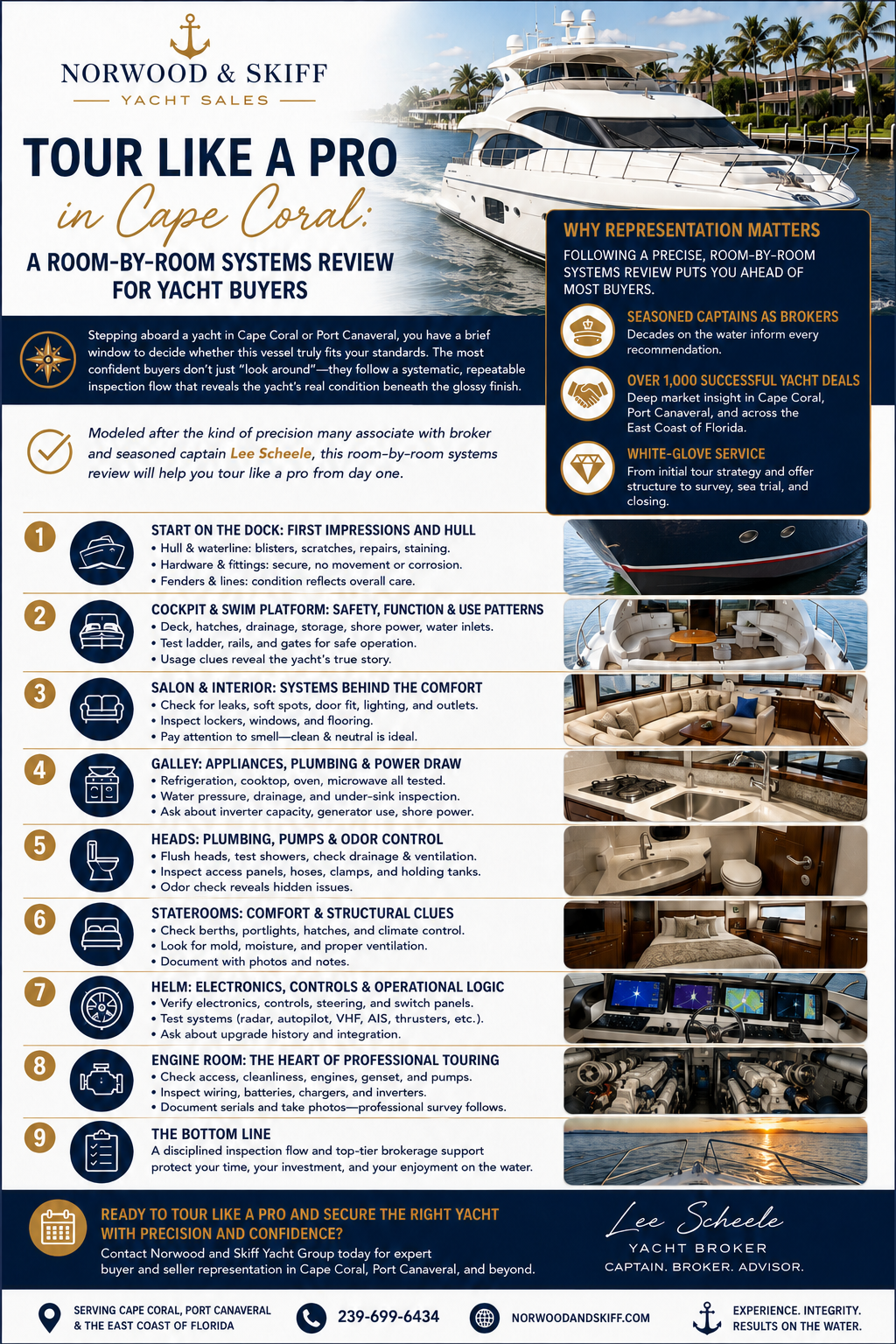
Tour Like a Pro in Cape Coral: A Room‑by‑Room Systems Review for Yacht Buyers
Stepping aboard a yacht in Cape Coral or Port Canaveral, you have a brief window to decide whether this vessel truly fits your standards. The most confident buyers don’t just “look around”—they follow a systematic, repeatable inspection flow that reveals the yacht’s real condition beneath the glossy finish.
Modeled after the kind of precision many associate with broker and seasoned captain Lee Scheele, this room‑by‑room systems review will help you tour like a pro from day one.
Start on the Dock: First Impressions and Hull
Before you even step aboard:
- Hull and waterline: Walk the dockside and visually scan the hull for blisters, scratches, repairs, and mismatched paint or gelcoat. Note any staining at the waterline, exhaust outlets, or through‑hulls.
- Hardware and fittings: Inspect cleats, fairleads, rails, and stanchions. They should be solid, with no movement or corrosion streaks.
- Fenders and lines: Check the condition and size. Neglected fenders and dock lines often mirror how the rest of the yacht has been maintained.
This quick pass sets expectations: a well‑kept exterior usually signals disciplined ownership.
Cockpit and Swim Platform: Safety, Function, and Use Patterns
The cockpit and swim platform reveal how the yacht has actually been used.
Key checkpoints:
- Deck condition: Look for soft spots, crazing, or patch repairs underfoot. Flexing can hint at moisture intrusion.
- Non‑skid and finishes: Worn or slippery surfaces show heavy use or deferred maintenance.
-
Storage hatches: Open every hatch. Check:
- Drainage (standing water is a red flag)
- Hinge integrity
- Cleanliness and odor
- Shore power and water inlets: Confirm shore cords are in good condition and connections are snug, with no burned or discolored plugs.
- Ladder and rails: Test the swim ladder and transom gates for firm, safe operation.
Ask where the yacht has primarily lived—Cape Coral canals, offshore runs, Bahamas crossings. The cockpit typically tells that story.
Salon and Interior: Systems Behind the Comfort
Once inside, you’re not just evaluating décor; you’re assessing systems, leaks, and long‑term care.
Work through the salon and cabins systematically:
- Overheads and windows: Look for staining, bubbling, or discolored headliners around hatches and windows—classic indicators of leaks.
- Floors and carpet: Soft areas or uneven flooring can point to moisture issues below.
- Doors and latches: Slide every door, open every locker. Misaligned or sticking hardware may hint at hull flex or past impacts.
- Lighting and outlets: Turn on all lights. Test a few outlets with a simple device (phone charger works in a pinch) to confirm power distribution.
Pay attention to smell. A clean, neutral scent usually suggests disciplined housekeeping and ventilation; strong fragrances can sometimes mask underlying moisture or holding tank issues.
Galley: Appliances, Plumbing, and Power Draw
The galley is a compact showcase of several critical onboard systems.
Inspect:
-
Refrigeration and freezers:
- Check door seals for cracks or gaps.
- Confirm temperatures are appropriate and consistent.
- Listen for excessive compressor cycling or unusual noise.
- Cooktop and oven: Power them on to verify function (shore power or generator as appropriate). Note whether they’re electric, induction, propane, or diesel, as this affects your cruising style.
-
Sinks and faucets:
- Run water at each sink.
- Check for good pressure and smooth flow.
- Look under the sink for leaks, corrosion, or makeshift plumbing repairs.
- Microwave and small appliances: Test each—these minor details reveal how the boat has been used and maintained.
Ask the broker about inverter capacity, generator run habits, and shore power configuration. A precise answer suggests proper operational discipline by the owner and listing team.
Heads: Plumbing, Pumps, and Odor Control
Marine heads can be a major pain point if not cared for properly.
Your pro‑level head check:
-
Toilets:
- Flush each head fully (with permission and in accordance with dock rules).
- Listen for smooth pump operation and quick bowl evacuation.
- Sinks and showers: Confirm hot and cold water at each fixture. Look for slow drainage or gurgling, which could indicate venting or plumbing issues.
- Odors and ventilation: Step out, close the door, and then re‑enter. Persistent odor can signal holding tank, hose, or vent problems.
-
Access panels: Locate and open reasonable access points to see hoses, clamps, and any visible portions of the holding tank. Check for:
- Cracked or stiff hoses
- Rusty or mismatched clamps
- Damp or stained surrounding surfaces
A well‑maintained sanitation system is a hallmark of meticulous ownership.
Staterooms: Comfort and Structural Clues
In staterooms, you’re checking for comfort today and structural integrity for tomorrow.
Review:
-
Berth bases: Lift mattresses and inspect:
- Undersides for mold or mildew
- Ventilation slots or fans
- Any signs of water intrusion from hull sides or deck
- Portlights and hatches: Open and close every one. Check seals, handles, and any condensation or weeping.
- Climate control: Confirm air conditioning performance in each zone. Uneven cooling can indicate ducting or unit issues.
Document your observations—photos and quick notes help during negotiations and survey review.
Helm: Electronics, Controls, and Operational Logic
The helm is the yacht’s brain. A disciplined evaluation here is crucial.
Confirm:
- Ergonomics: Sit in the helm seat. Can you comfortably see all instruments, controls, and the bow? Visibility and layout affect safety.
-
Electronics suite:
- Power on all displays (MFDs, radar, sonar, autopilot, VHF, AIS).
- Confirm software appears current and responsive.
- Check for consistent brand ecosystem or mismatched, dated devices.
- Controls and steering: With engines off, move throttles, shift levers, bow/stern thruster controls, and steering wheel. Feel for stiffness, play, or lag.
- Switch panels: Toggle major systems (lights, wipers, horn, windlass). Labeling should be clear and organized.
Ask the broker for any electronics upgrade history and integration details. Precision in this discussion mirrors the precision in how the yacht has been set up.
Engine Room: The Heart of Professional Touring
This is where seasoned captains and expert brokers distinguish themselves. Even without turning a wrench, you can learn a lot.
Look for:
-
Access and cleanliness:
- Is access safe and practical?
- Are bilges reasonably clean and dry?
-
Engines:
- Check for corrosion, salt buildup, or fresh oil leaks.
- Look at belts, hoses, and clamps for age and wear.
- Note engine hours and compare port vs. starboard for significant variance.
- Generators and mechanicals: Inspect generator, water heaters, air conditioning compressors, and pumps for labeling and apparent care.
-
Electrical systems:
- Open main electrical panels (if safe) for neat wiring and labeling.
- Note the presence and age of batteries, chargers, and inverters.
Document serial numbers and take photos. A professional survey is essential, but this walkthrough frames your expectations and negotiating stance.
Why Representation Matters for Both Buyers and Sellers
Following a precise, room‑by‑room systems review puts you ahead of most buyers. But the difference between a good deal and the right deal often lies in expert representation.
Norwood and Skiff Yacht Group brings:
- Seasoned captains as brokers: Decades on the water inform every recommendation.
- Over 1,000 successful yacht deals: Deep market insight in Cape Coral, Port Canaveral, and across the East Coast of Florida.
- White‑glove service: From initial tour strategy and offer structure to survey, sea trial, and closing.
Whether you’re buying or selling, a disciplined inspection flow and top‑tier brokerage support protect your time, your investment, and your enjoyment on the water.
Ready to tour like a pro and secure the right yacht with precision and confidence?
Contact Norwood and Skiff Yacht Group today for expert buyer and seller representation in Cape Coral, Port Canaveral, and beyond.