We can't find the internet
Attempting to reconnect
Something went wrong!
Hang in there while we get back on track
Experienced Boaters
Make Better Brokers.
Call us today and see for yourself.

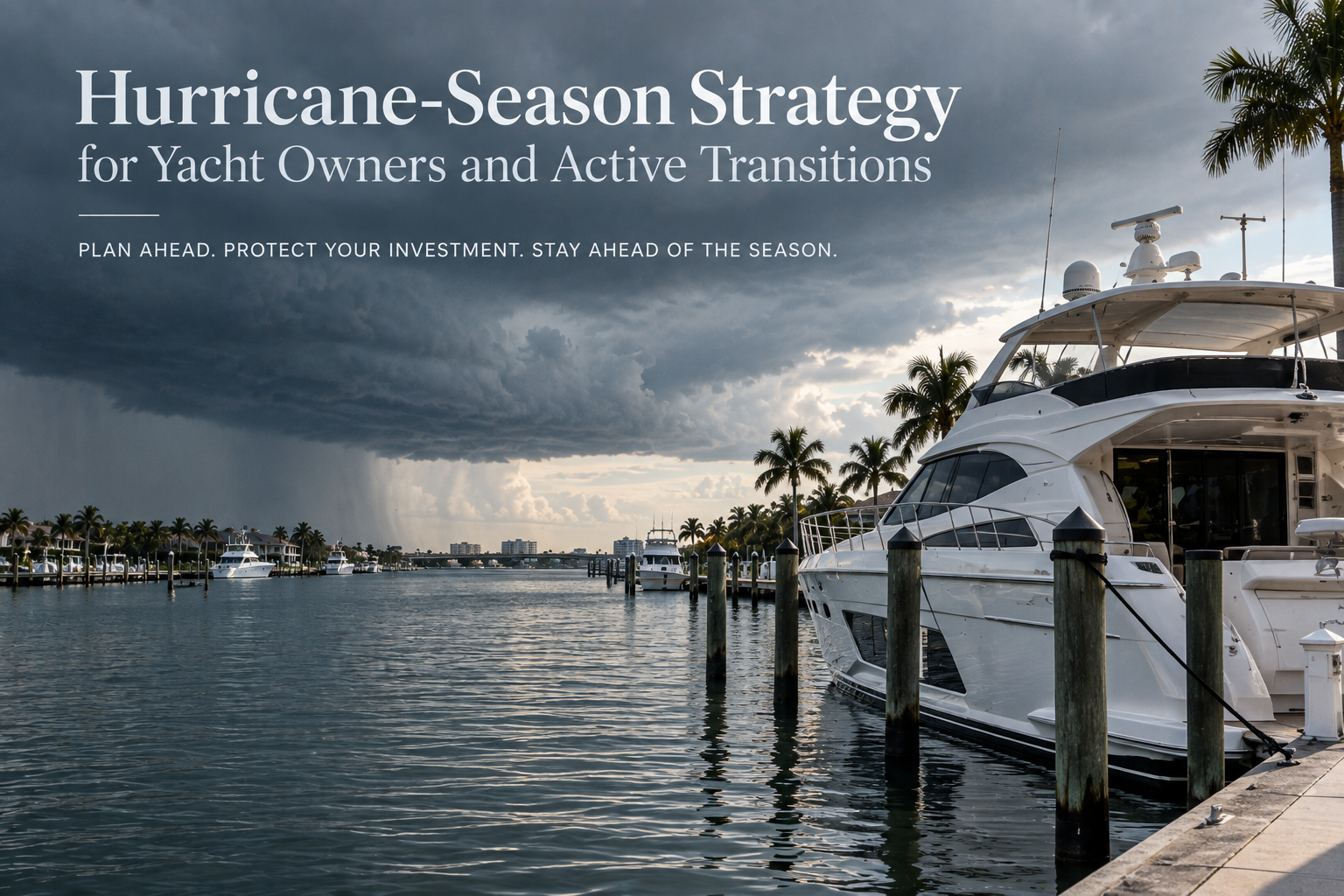
Hurricane Season Strategy for Yacht Owners and Active Transactions
In Southwest Florida, hurricane season is not an abstract risk—it’s a business reality. Whether you own a yacht in Cape Coral, Fort Myers, Naples, or Punta Gorda, or you’re in the middle of buying or selling one, your hurricane strategy directly affects safety, insurability, marketability, and value.
At Norwood & Skiff Yacht Group, we look at hurricanes the way good captains do: as an operational and risk-management problem, not just a weather event.
Below is a practical framework for yacht owners and for buyers and sellers involved in active transactions during hurricane season.
1. Start With Insurance: Coverage, Requirements, and Timing
Hurricane season is when vague insurance assumptions become expensive surprises. Before you move a yacht, sign a contract, or close on a purchase, you should understand:
Key hurricane-related insurance questions
For owners and buyers:
- Named-storm deductible – Often higher than your standard hull deductible. Know the percentage and what it applies to.
- Navigation limits – Are you allowed to remain in Southwest Florida through hurricane season, or are seasonal relocations required?
-
Lay-up or haul-out requirements – Some policies require:
- Haul-out at a certain wind threshold
- Relocation to a designated hurricane hole
- A documented storm plan on file
-
Proof of a hurricane plan – Insurers increasingly want:
- A written storm plan
- Yard or marina agreements
- Contact information for your captain or yacht manager
For sellers and active transactions:
- Coverage through closing – Confirm that your current policy remains in force and the yacht is fully insured until ownership legally transfers.
-
During sea trials and surveys – Understand:
- Who’s responsible for insurance during the sea trial (often the seller, but not always)
- Whether your policy covers trial runs during a named storm watch or warning
-
Post‑storm damage – If a hurricane hits while the yacht is listed:
- Report any damage promptly
- Document condition thoroughly before and after the event
- Adjust pricing and disclosures based on actual repairs and survey findings
For buyers, don’t assume you can “sort insurance out later.” In hurricane season, a realistic insurance quote and clear coverage conditions should be part of your evaluation—before you sign or waive contingencies.
2. Yard Reservations and Storm Planning in Southwest Florida
In Cape Coral, Fort Myers, Naples, Marco Island, and Charlotte Harbor, good hurricane storage and haul-out options fill up quickly. Planning early protects both your yacht and its future resale value.
Secure yard and marina options early
Consider:
-
Haul-out reservations – For many 36–80 ft yachts, the most practical protection is:
- A pre-arranged haul-out slot at a capable yard
- Clear understanding of lift capacity and draft limits
- Hurricane-rated dry storage – For certain boats, indoor or high-and-dry storage may be the best risk-adjusted choice.
-
Hurricane moorings or hurricane holes – Where haul-out isn’t feasible:
- Pre-surveyed hurricane mooring systems
- Protected canals or basins with adequate depth, swing room, and wind protection
Tie these to the realities of Southwest Florida: canal width, turning room, draft, and air draft all determine which options are actually available to your yacht.
Build a written storm plan
A solid hurricane plan should specify:
-
Planned location for:
- Category 1–2 storms
- Category 3+ storms
-
Who is responsible for:
- Haul-out or relocation
- Securing lines, fenders, and chafe gear
- Removing and stowing canvas, cushions, and loose gear
- How power, shore cords, and sensitive systems will be handled
- How the vessel will be documented pre- and post-storm (photos, video, engine hours, systems check)
Owners who rely on absentee management should have this formalized with a yacht manager or captain. This protects the vessel and provides clear documentation for future buyers and their surveyors.
3. Active Transactions: Contract Strategy in Hurricane Season
When a yacht is under contract during hurricane season, everyone shares a basic concern: keep the deal moving without ignoring real risk. That starts with clean, realistic contract language and expectations.
Timing: survey, sea trial, and closing
For buyers and sellers:
- Schedule surveys and sea trials early in the contingency period. Weather delays are common; you want room to reschedule without pushing closing into peak storm windows.
- Avoid forcing sea trials in marginal conditions. A sea trial is about evaluating the yacht, not proving you’re willing to run in a small craft advisory.
-
Allow for post-storm reinspection rights. If a storm passes between survey and closing, contracts should address:
- Buyer’s right to reinspect
- How new damage is handled (repair, price adjustment, or contract termination)
Risk allocation and deposits
You want the contract to:
- Clearly state when risk of loss transfers from seller to buyer
-
Define what happens to the deposit if:
- The yacht is significantly damaged or lost
- Insurance issues arise that materially change risk or cost
-
Tie deposit and closing to practical items:
- Satisfactory survey and sea trial
- Confirmed insurability at acceptable terms
- Resolution of any hurricane-related repairs or claims
A good buyer’s broker or listing broker is not practicing law, but they should understand these concepts well enough to flag issues early and work with the parties and their counsel to structure terms appropriately.
4. Protecting Value and Momentum Without Taking Unnecessary Risks
The goal in hurricane season is to protect both the yacht and the integrity of the transaction.
For owners and sellers
To maintain value:
-
Keep maintenance current and documented. After a storm, buyers and surveyors will look closely at:
- Service history
- Corrosion control
- Hull, deck, and structural findings
-
Document pre-storm condition. Detailed photos and video of:
- Bottom, running gear, and through-hulls (if recently hauled)
- Engine room, bilges, electrical systems
-
Upholstery, canvas, and topsides
help distinguish storm damage from preexisting wear.
- Disclose storms and repairs honestly. A properly repaired, well-documented storm event can be more acceptable to a serious buyer than uncertainty and incomplete information.
For buyers
To protect your position:
-
Insist on a complete survey and sea trial after any major storm in the area. Even if the yacht “looks fine” at the dock, you want:
- Moisture readings
- Structural inspection
- Running gear and systems evaluation
-
Adjust valuation to real, risk-adjusted value. That includes:
- Evidence of any repairs
- Changes in insurability or premiums
- Future market perception of storm-exposed vessels
The lowest-price option after a storm is not always the best value. A yacht that weathered a storm in a proper yard, with professional preparation and documentation, can be a better long-term asset than one left unprotected but superficially unscathed.
5. How an Experienced, Technical Yacht Broker Helps in Hurricane Season
This is where experience matters more than salesmanship. A broker with captain-level and service-side background should help you:
- Evaluate whether a yacht is suitable for Southwest Florida hurricane and canal realities
- Structure contract timing to avoid unnecessary hurricane exposure
- Interpret survey findings that may be storm-related or exacerbated by local conditions
- Confirm you have a credible storm plan and yard or marina support
-
Decide when the right move is to:
- Repair and proceed
- Reprice and reposition
- Or walk away
For Norwood & Skiff, hurricane season is part of the due-diligence conversation—not an afterthought.
If you’re buying or selling a yacht in Cape Coral, Fort Myers, Naples, Marco Island, Punta Gorda, or nearby Southwest Florida markets and want hurricane-season strategy grounded in real operating and transaction experience, contact Norwood & Skiff Yacht Group to speak directly with an experienced captain-broker.