We can't find the internet
Attempting to reconnect
Something went wrong!
Hang in there while we get back on track

Experienced Boaters
Make Better Brokers.
Call us today and see for yourself.


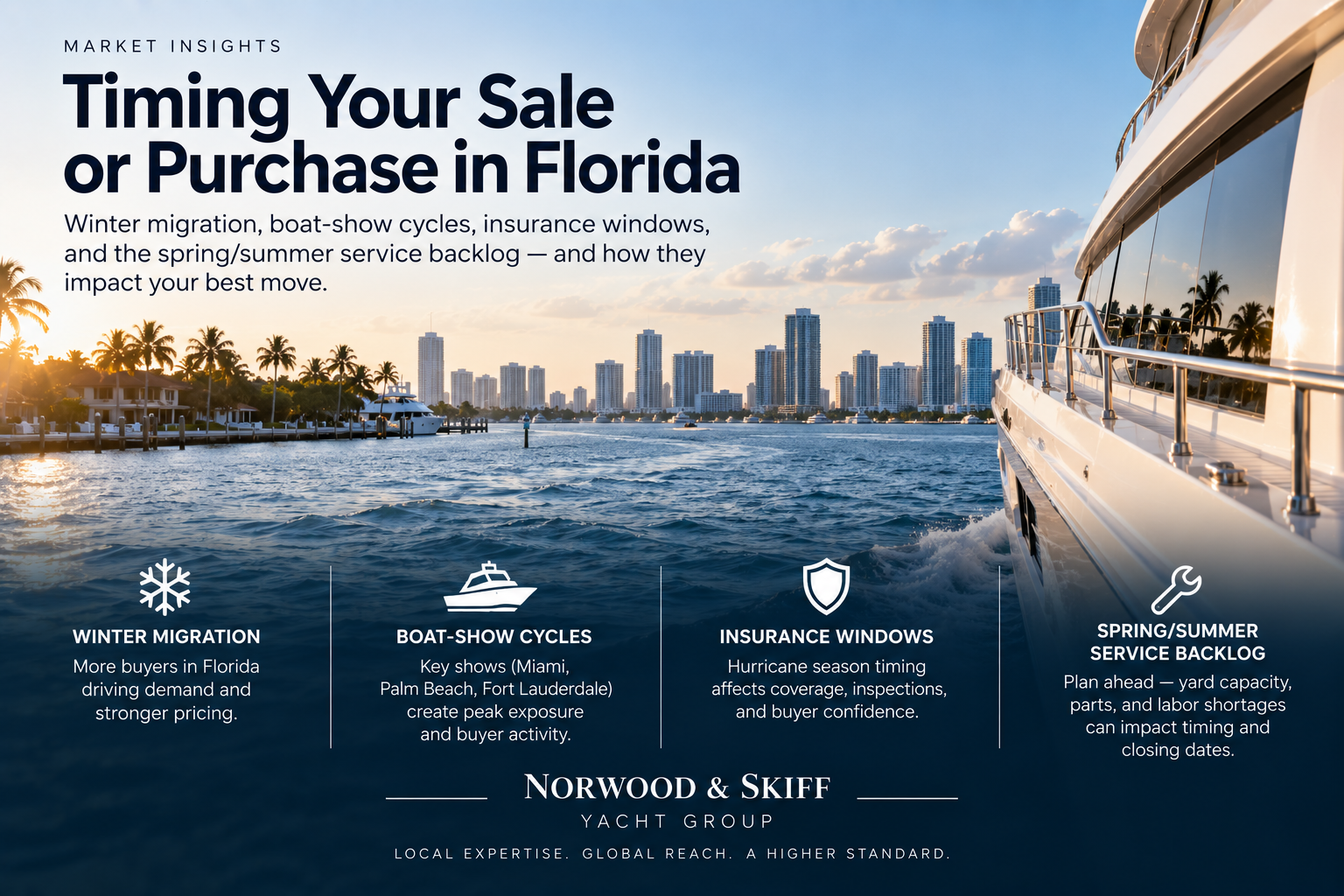
Timing Your Yacht Sale or Purchase in Florida: How Seasonality Shapes Price, Speed, and Leverage
In Florida, timing is not a minor detail in a yacht transaction—it’s one of the major drivers of price, time-on-market, and negotiating power.
For Southwest Florida in particular—Cape Coral, Fort Myers, Naples, Marco Island, Punta Gorda, Sanibel, Captiva, Pine Island, and Charlotte Harbor—the market moves in fairly predictable waves tied to winter migration, boat shows, insurance, hurricanes, and the service calendar.
Norwood & Skiff Yacht Group approaches timing the same way we approach survey and valuation: with market evidence, operating experience, and realistic expectations.
Below is how the calendar really works—and how to use it to your advantage as a buyer or seller.
The Winter Migration: When Buyers Come to You
From roughly November through April, Southwest Florida fills with seasonal residents and visitors. Many are serious, qualified yacht buyers with limited time on the ground.
What this means for sellers
- More qualified traffic. Winter is typically when we see the highest concentration of ready, funded buyers walking docks, touring marinas, and actively searching “Cape Coral yachts for sale” or “Fort Myers yacht broker.”
- Shorter days on market. Properly priced, well-presented yachts with documented maintenance and clean surveys tend to move faster in this period.
- Better odds of multiple interested parties. Competition between buyers can reduce discounting from asking price, especially on late-model, well-maintained inventory.
For sellers, this window rewards:
- Realistic, evidence-based pricing
- Professional listing photography and video
- A yacht that shows well and is easy to sea trial
What this means for buyers
- More competition. You may be bidding against other winter visitors, especially on the most desirable models in Cape Coral and Naples.
- Less negotiating leverage on prime listings. Sellers see strong showing activity and may be less inclined to entertain low offers.
- But more inventory to evaluate. Many owners list to capture winter traffic, giving you a broader selection.
If you’re a buyer, winter is a good time to survey the market and identify the right type of yacht—but you’ll need a disciplined buyer’s broker to keep you from overpaying just because a listing is busy.
Boat-Show Cycles: Hype, Exposure, and Post-Show Reality
Major Florida boat shows (Fort Lauderdale, Miami, Palm Beach, regional shows) shape expectations and behavior for both new and used yacht buyers.
Pre‑show and during-show period
- New-boat energy spills into pre-owned. Shoppers who price new boats at a show often return to the brokerage market looking for “late model, used yachts for sale” with similar layouts and systems.
- Sellers may hold firm. Many owners wait to list just before show season, expecting stronger exposure and higher prices.
Post-show resets
The weeks and months after the show circuit can be attractive for used-yacht buyers:
- Some buyers who signed new-build or new-boat contracts put their existing yachts on the market, adding inventory.
- Other buyers leave shows realizing that new pricing is beyond their appetite and re-focus on brokerage yachts—raising demand, but with more options on the market.
A data-driven broker helps you separate show-induced optimism from actual market evidence and comparable sales.
Insurance Windows, Hurricane Season, and Risk Perception
In Florida, insurance and hurricanes quietly drive many timing decisions—especially for yachts kept in Southwest Florida.
Hurricane season (June 1–November 30)
- Insurance constraints. Some insurers restrict new policies, coverage changes, or navigation limits during peak season, or require firm hurricane plans.
- Some buyers delay. Risk-averse buyers prefer to finalize a purchase after the most active part of the season.
- Motivated sellers surface. Owners who don’t want to manage another season of hurricane planning, haulouts, or storm exposure may be more flexible on price.
This can create buying opportunities for those willing to purchase during hurricane months—if you understand:
- Storm-prep requirements
- Storage and haulout options in Cape Coral, Fort Myers, and Charlotte Harbor
- Insurance conditions and deductibles
Post‑storm and post‑season periods
- After a major storm: Inventory can be distorted. Some damaged yachts enter the market, and some well-maintained, storm-managed yachts become more attractive by contrast. Due diligence, survey, and sea-trial strategy matter more than ever.
- Late fall (pre‑winter): Buyers looking to position the boat in Florida for winter cruising (Sanibel, Captiva, Cayo Costa, Naples, Florida Keys, Bahamas) may move quickly, especially if insurance and storm risk look manageable.
Spring and Summer: Service Backlog and Negotiating Power
Spring and early summer in Southwest Florida bring a different kind of pressure: the yard schedule.
The spring/summer service backlog
By March–July:
- Haulouts and bottom work are booked out.
- Mechanics, electricians, and detailers are busy.
- Survey follow-up work can drag on, affecting closing timelines.
For buyers, this has clear implications:
- If the survey and sea trial uncover non-trivial issues, getting accurate repair quotes and scheduling work can be slow.
-
That delay can become leverage:
- Price concessions to offset expected yard work
- Escrow holdbacks or seller-paid repairs where feasible
- You must budget realistically for ownership costs and downtime, not just the purchase price.
For sellers:
- Listing a yacht with deferred maintenance going into spring and summer is a tactical disadvantage.
- Buyers see the backlog, factor in the hassle, and discount accordingly.
- Completing overdue service and organizing documentation before listing helps preserve value and reduce renegotiation after survey.
Seasonality and Negotiating Power: Who Has the Edge, When?
A simplified way to view it:
-
Late Fall–Winter (high season)
- Sellers of well-presented yachts: stronger pricing power
- Buyers: more competition; need stronger market analysis and disciplined offering strategy
-
Late Winter–Early Spring (pre-backlog)
- Buyers: still active; good time for clean survey and timely service
- Sellers: opportunity to list with fresh service and capitalize on remaining seasonal demand
-
Late Spring–Summer (service backlog + hurricane concerns)
- Buyers willing to manage risk and timing: more leverage on price and terms
- Sellers with aging or less-maintained inventory: increased pressure to be realistic
-
Late Summer–Early Fall (storm anxiety, pre‑season planning)
- Motivated sellers may accept market-correcting offers
- Serious buyers can negotiate from a position of patience, especially if they’re targeting use in the following winter
How Norwood & Skiff Uses Timing to Protect Your Interests
At Norwood & Skiff, timing isn’t about “catching the hot moment.” It’s about:
-
Aligning your goals with the right window.
- Selling quickly at a fair, evidence-based price
- Buying the right yacht for how you actually intend to use it—Great Loop, Bahamas, local cruising—from Cape Coral canals to offshore runs
-
Interpreting market evidence.
- Comparable sales
- Actual days on market by type, size, and price band
- Seasonal inventory waves in Southwest Florida
-
Structuring offers and contracts to manage seasonal risk.
- Survey and sea-trial strategy around service availability
- Realistic timelines and contingencies
- Clear understanding of what happens to your deposit if a transaction fails under contract terms
We do not believe every transaction should close. Sometimes the combination of timing, condition, insurance, and ownership costs leads us to recommend that a client walk away.
Considering a Sale or Purchase in Southwest Florida?
Whether you’re thinking of selling in Cape Coral or Fort Myers this winter, or buying a Great Loop-capable yacht ahead of next season, timing your move around migration patterns, boat-show cycles, insurance windows, and the service calendar can materially change your outcome.
If you’d like candid, experience-based guidance on when—and how—to enter the market, contact Norwood & Skiff Yacht Group to speak directly with an experienced captain-broker.