We can't find the internet
Attempting to reconnect
Something went wrong!
Hang in there while we get back on track

Experienced Boaters
Make Better Brokers.
Call us today and see for yourself.

Deposits, Contingencies, Escrow, and Timelines in Florida Yacht Contracts: What Really Protects You
In a Florida yacht sale, the numbers on the listing are only half the story. The real risk—and protection—lives in the contract: your deposit, contingencies, escrow instructions, and timelines. Understanding these terms before you sign often matters more than the last few percent of price.
Norwood & Skiff Yacht Group approaches contracts the way working captains and managers do: as operating documents that need to hold up under stress, not just get a deal on the board. Below is a practical overview of how Florida yacht contracts typically work, where buyers and sellers are protected, and where problems most often arise.
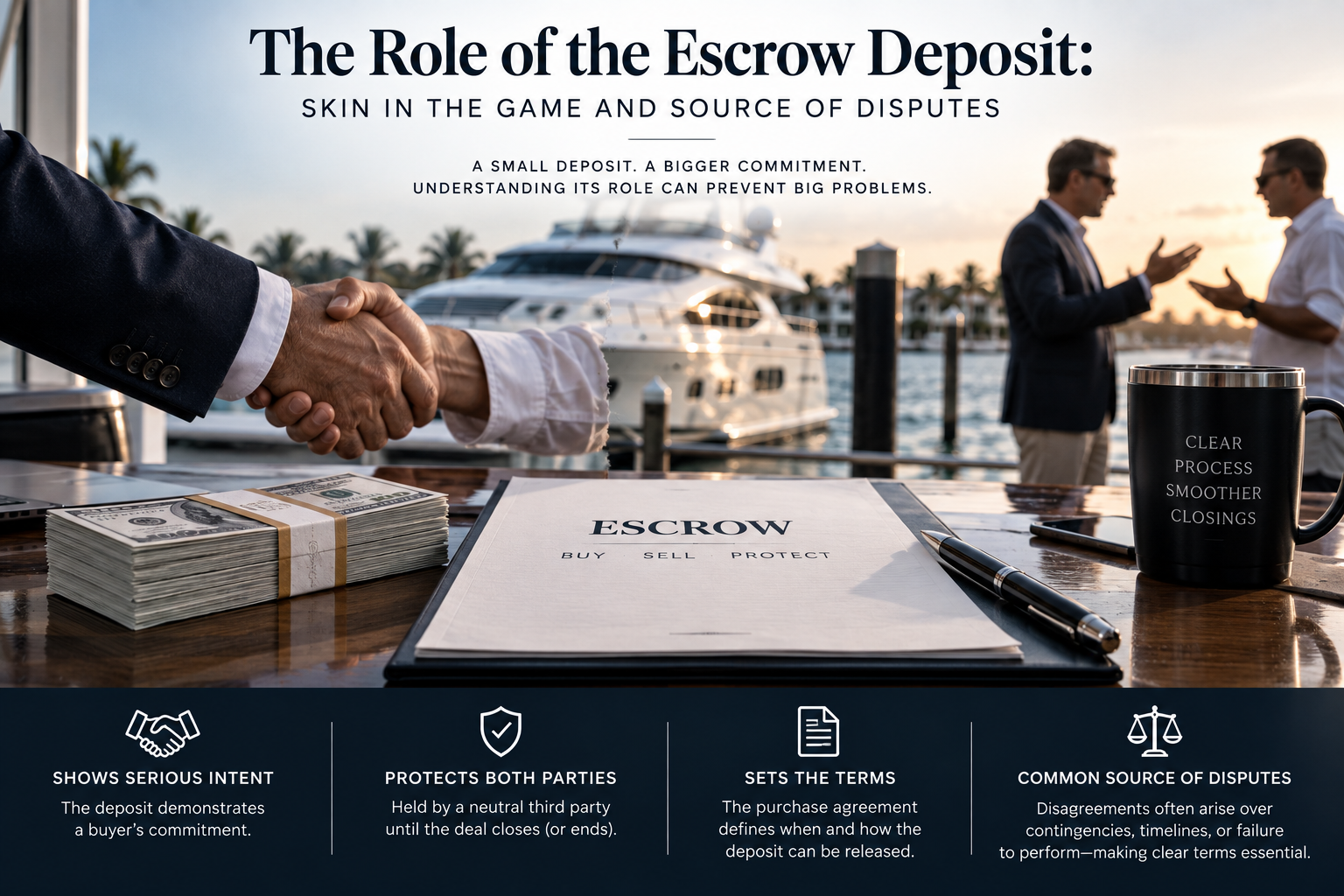
The Role of the Deposit: Skin in the Game and Source of Disputes
What the deposit is
The deposit (often 10% of the agreed price on larger yachts, sometimes less on smaller boats) is usually paid into escrow with a brokerage or closing agent once buyer and seller have a signed agreement.
It is intended to:
- Show the buyer is serious
- Secure the yacht and take it “off the market” during due diligence
- Provide a fund that may be forfeited if the buyer defaults under the contract
What the deposit does NOT guarantee
- It does not guarantee the yacht is in any particular condition.
- It does not guarantee financing, insurance, or a slip.
- It does not guarantee the sale closes on schedule.
Your contract language determines when the deposit is refundable, when it becomes non‑refundable, and under what conditions. Those trigger points are where most preventable disputes begin.
Escrow: Safe Holding or Source of Friction?
What escrow is
Escrow is a neutral holding of funds under written instructions. The escrow agent (often the listing brokerage) holds:
- The initial deposit
- Sometimes the balance due at closing
The escrow agreement or contract will state:
- Who holds the funds
- Under what conditions they are released
- What happens if buyer and seller disagree
What actually protects you
- Funds should be held in a clearly identified escrow or trust account, not in someone’s operating account.
-
There should be clear written instructions for release upon:
- Successful closing
- Buyer’s timely and valid cancellation under a contingency
- Mutual written release
- Final court/arbitration order in case of dispute
What does NOT protect you
- Assuming the broker “will just do what’s fair” absent clear contract language
- Vague cancellation notices (“I’m not sure about this boat anymore”) without tying them to a contractual contingency and deadline
At Norwood & Skiff, we walk clients through when their deposit is fully at risk, partially at risk, or still subject to valid contingencies, before they sign.
Contingencies: Your Real Safety Net
A contingency is a contract clause that allows the buyer to cancel under defined conditions and recover the deposit. In Florida yacht transactions, the main ones are:
1. Survey Contingency
The survey is a professional inspection of the vessel’s structure, systems, and overall condition.
Typical clause elements:
- A defined survey period (e.g., 7–14 days from contract or from acceptance of offer)
-
Buyer’s right to:
- Conduct a haul-out
- Hire independent surveyors (hull, mechanical, electronics, etc.)
- Access service records provided by seller
-
A deadline by which buyer must:
- Accept the yacht as-is, or
- Reject the yacht and cancel, or
- Present a list of deficiencies and request repairs or price adjustment
Protection comes from:
- Clear survey timelines and response deadlines
- Written notice tied to survey findings
- An experienced broker who can help interpret survey results versus your intended use and risk tolerance
2. Sea Trial Contingency
The sea trial is the functional test: how the yacht performs underway.
Typical clause elements:
- Defined date window for sea trial
- Allocation of costs (fuel, captain, haul-out if haul is tied to sea trial)
- What constitutes failure (e.g., inability to reach RPM, excessive vibration, critical systems not functioning)
A well-written contingency allows the buyer to reject the vessel and recover the deposit if the yacht materially fails the agreed test and seller declines to cure.
3. Financing, Insurance, and Sale-of-Current-Vessel
These are far less common on late-model, higher-end yachts, but they do appear:
- Financing contingency: Buyer may cancel if unable to secure acceptable financing by a given date.
- Insurance contingency: Particularly relevant in Florida, where some vessels and buyers struggle to obtain coverage.
- Sale-of-vessel contingency: Buyer’s purchase contingent on selling an existing boat.
Sellers often resist open-ended contingencies. If present, they should have:
- Clear application/effort obligations on the buyer
- Specific approval deadlines
- Automatic release of the seller if deadlines pass without satisfaction
Timelines: Where Good Deals Go Bad
Even with fair contingencies, poor management of timelines causes unnecessary conflict. Pay close attention to:
- Survey and sea trial window
- Cure period (more below)
- Closing date
- Deadlines for notices (accept, reject, or renegotiate)
In many forms, missing a deadline can convert a refundable deposit into a non‑refundable one or be treated as acceptance of the vessel.
An experienced broker should:
- Calendar every key date
- Confirm yard, surveyor, and captain availability before agreeing to tight windows
- Leave enough time for written quotes on remedial work
Cure Periods: Fixing Problems vs. Walking Away
A cure period is the seller’s opportunity to repair or address deficiencies identified in survey or sea trial.
Typical approach:
- Buyer delivers a written list of material deficiencies by the survey deadline.
-
Seller can:
- Agree to cure specific items within a defined time, or
- Offer a price adjustment or credit, or
- Decline to cure or adjust
-
Buyer then:
- Accepts the cure/adjustment and proceeds, or
- Rejects and cancels, with deposit return if within contingency terms
Protection for buyers:
- Clearly defining what is considered a “material” defect
- Requiring repairs by qualified professionals with invoices and, when appropriate, re-inspection
- Avoiding open‑ended promises (“we’ll take care of it”) without specifics
Protection for sellers:
- Limiting buyer demands to items that legitimately affect safety, operation, or value
- Specifying that minor cosmetic issues are excluded if sold “as-is, where-is”
- Setting a reasonable cure period that still allows for a timely closing
At Norwood & Skiff, we often help clients decide whether to request a cure, negotiate price, or simply walk away when cure items become excessive or uncertain.
Avoiding Preventable Disputes Over Funds and Obligations
Most deposit and escrow disputes are avoidable with:
1. Clear, written communication
- Notices of rejection, acceptance, or renegotiation must be in the form and timeframe the contract requires.
- “I’m uncomfortable” is not a contractual reason; “pursuant to the survey contingency, I reject the vessel based on the following findings…” usually is.
2. Realistic timelines
- Allow time to get on a lift, obtain engine diagnostics, and receive written quotes.
- Do not assume every yard or surveyor in Cape Coral, Fort Myers, or Naples can fit you in at short notice during peak season.
3. Evidence-based negotiations
- Use survey reports, comparable sales, and documented maintenance to support any request for price changes.
- Avoid emotional reactions to “survey shock”; almost every used yacht has issues.
4. Brokers with operating and transaction experience
- A broker who has spent years on the service and captain side tends to anticipate where deals break.
- That experience helps draft cleaner addenda, negotiate more practical cures, and explain when the smart move—for buyer or seller—is to release each other and move on.
How Norwood & Skiff Helps Protect Your Position
Norwood & Skiff brokers approach Florida yacht contracts as risk-management tools, not just paperwork:
- Explaining each clause in plain language before you sign
- Calibrating deposit amounts and timelines to the yacht and market
- Structuring survey and sea-trial strategies for the way you actually plan to use the boat—Cape Coral canals, offshore runs, Bahamas crossings, or Great Loop cruising
- Using market evidence, documented maintenance, and condition to support your price and cure decisions
- Being candid when the risk-adjusted value doesn’t justify moving forward
If you’re a buyer or seller in Southwest Florida and want experienced judgment on your side—from first offer through closing—Norwood & Skiff Yacht Group is ready to help.
Contact us today to discuss your yacht, your contract questions, and how to protect your interests in your next transaction.